

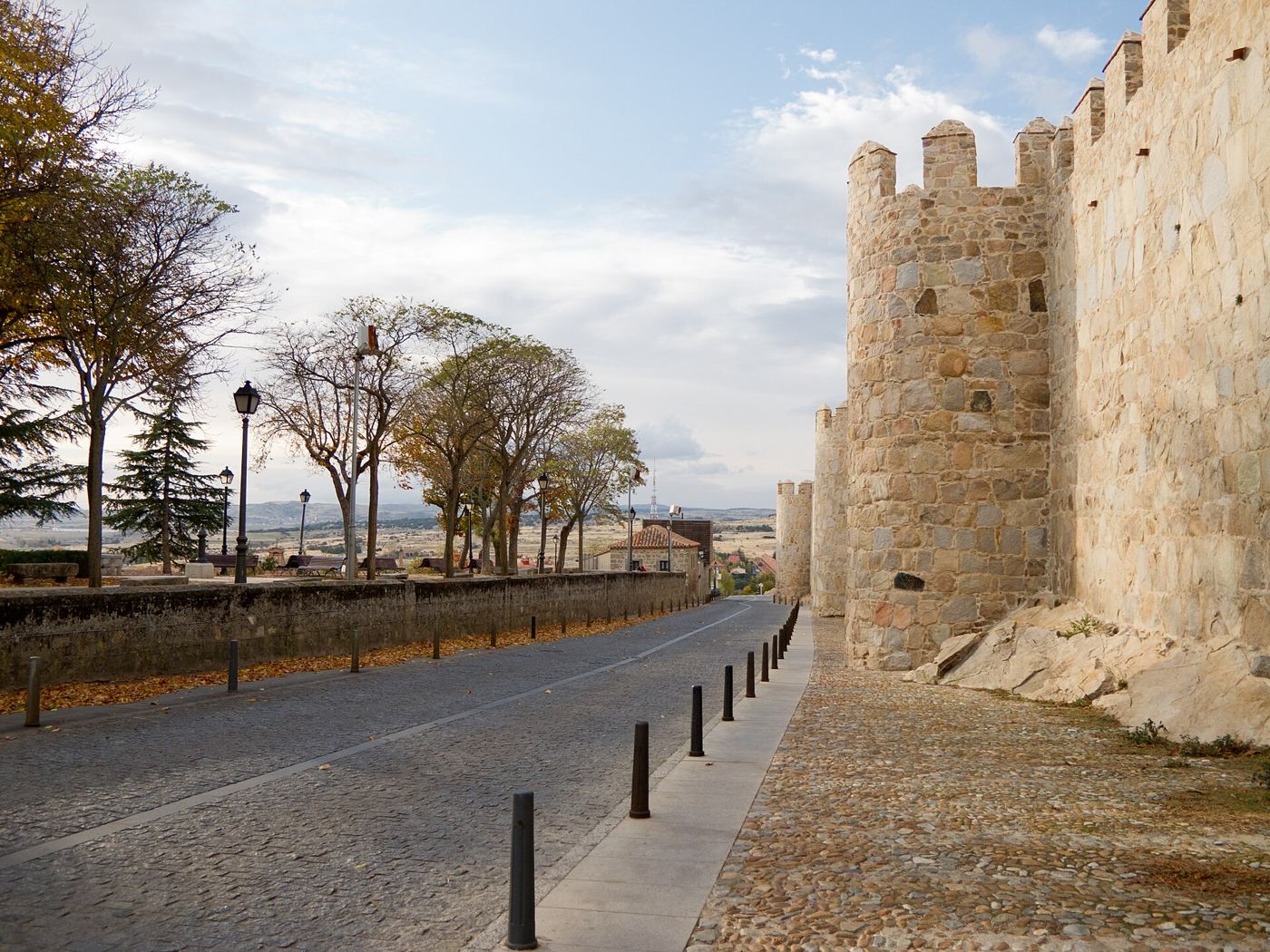
From the train window, they appear all at once: two and a half kilometres of granite wall, eighty-eight towers, nine gates — a complete medieval circuit wrapped around the old town of Ávila like a clasp. The walls have stood since the eleventh century, but their audience is new. Alongside the traditional day-trippers from Madrid, the city is drawing younger travellers who stay overnight, work remotely for a week, and come for the combination of monument, mountain air and unhurried Castilian life.
A monument you can walk on
Unlike many famous fortifications, Ávila’s walls are not a backdrop but an experience: visitors can climb and walk long stretches of the parapet, looking one way over tiled roofs and Romanesque churches, the other across the high meseta toward the Sierra de Gredos. The circuit is routinely described by heritage bodies as the best-preserved in Spain, and the old town within it is protected as a UNESCO World Heritage Site. Evening illuminations have added a new ritual — the walls turn amber at dusk, and the paseo fills with locals and visitors sharing the same slow circuit their grandparents walked.
Staying longer, spending locally
Tourism officials have worked to convert that beauty into livelihoods without hollowing out the town. Small hotels in converted palacios, guided night tours, and a calendar of music and gastronomy events aim to stretch the average visit beyond a single afternoon. The famous yemas de Santa Teresa — the egg-yolk sweets made by cloistered nuns for centuries — now share the stage with a serious local food scene built on Ávila’s beef, beans and high-altitude wines. Our travel pages map the gates, towers and viewpoints worth your steps.
The balancing act
Success brings the familiar dilemma of heritage cities: how to be loved without being overrun. Ávila’s numbers remain modest beside Spain’s coastal giants, and residents are determined to keep it that way — favouring cultural travellers over crowds, and protecting the quiet that is itself part of the attraction. For now, the walls hold both the city and the balance.
Autumn may be the finest season to come: the meseta light turns gold, the summer heat breaks, and the walls at dusk belong almost to the swifts. A city that has watched eight centuries pass can afford to take its time — and invites its visitors to do the same.
Practicalities reward the unhurried. The walls open early, and the first hour — cool light, empty parapets, swallows diving along the towers — is the finest of the day. Combine the circuit with the cathedral, whose fortress-like apse is built directly into the walls, and the Carmelite convent marking the birthplace of Saint Teresa, whose writings made this small city a name known across the Catholic world. Ávila rewards those who read it slowly, stone by stone.
